Unpacking How Aggregated User Insights Shape Adaptive Wagering Tactics in Regulated Digital Markets
Petra Russell · Oct 15, 2026

Unpacking How Aggregated User Insights Shape Adaptive Wagering Tactics in Regulated Digital Markets
Regulated digital markets rely on large-scale collection of anonymized betting records to identify trends that individual participants rarely notice on their own. Platforms process millions of transactions daily, grouping data by sport, stake size, timing, and market type, and these clusters reveal recurring behaviors that operators translate into dynamic adjustments for odds and risk limits. In October 2026 several jurisdictions expanded mandatory reporting intervals for such datasets, requiring operators to submit aggregated summaries every two weeks instead of monthly, and the change has accelerated how quickly platforms refine their adaptive models.
Data Collection Mechanisms in Practice
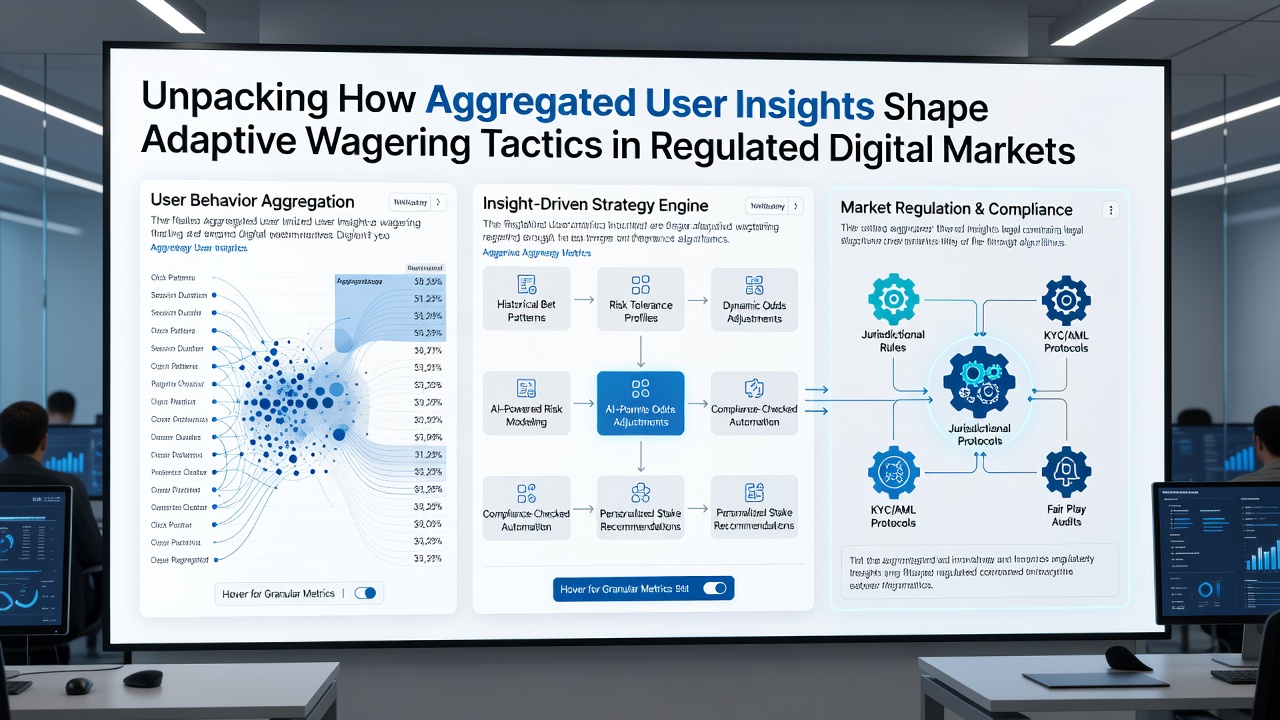
Operators capture transaction logs through secure application programming interfaces that strip personal identifiers before storage, leaving only timestamps, wager amounts, selection categories, and outcome results. Researchers at institutions tracking North American markets note that these cleaned records feed into clustering algorithms which segment users into cohorts based on volatility tolerance and session duration. The resulting profiles allow platforms to shift line movements or promotional thresholds in real time without targeting any single account. Government agencies in Canada and Australia have published technical guidelines that specify minimum sample sizes for aggregation, ensuring statistical validity while satisfying privacy statutes that took effect earlier in 2026.
Translation of Insights into Tactical Adjustments
Once cohorts are established, platforms apply the patterns to recalibrate risk engines. When aggregated data shows elevated activity on underdog spreads during evening hours in specific leagues, automated systems widen those margins by fractions of a point to balance liability. Adaptive tactics also extend to liquidity management, where operators increase or decrease available stake ceilings across entire market segments rather than per user. A 2025 industry report prepared for European regulators documented that such cohort-level interventions reduced variance in operator margins by measurable percentages across multi-jurisdiction operations. Those who've examined the underlying code confirm that the adjustments occur through rule-based overlays rather than individualized nudges, preserving compliance with rules that prohibit differential treatment based on inferred user profiles.
Regulatory Frameworks Guiding Implementation
Regulators across multiple regions have converged on requirements that demand transparency in how aggregated data influences market parameters. The Malta Gaming Authority updated its technical standards in mid-2026 to require audit trails for any automated change triggered by cohort analysis, and similar provisions appear in draft rules circulating in several U.S. states. These frameworks emphasize documentation of the statistical thresholds that activate adjustments, allowing oversight bodies to verify that changes remain proportionate and non-discriminatory. Observers note that the emphasis on auditability has prompted operators to maintain parallel datasets, one for operational modeling and another formatted specifically for regulatory submission.
Cross-Market Comparisons and Emerging Patterns
Comparative studies released by research centers in Australia and the European Union highlight differences in how aggregation influences tactics across time zones and sports calendars. Markets with overlapping fixtures tend to show tighter correlation between user cohorts, prompting operators to synchronize adjustment protocols during peak overlap periods. Data released in October 2026 from one multi-state operator consortium indicated that cross-border aggregation improved forecast accuracy for rare event combinations by incorporating volume from jurisdictions where those events occur more frequently. The same dataset revealed that adaptive stake limits calibrated on aggregated late-night behavior reduced exposure spikes during major tournaments without altering the underlying odds offered to the broader market.
Technical Infrastructure Supporting Real-Time Adaptation
Modern platforms deploy distributed computing environments that process incoming transaction streams within milliseconds, applying pre-trained models that update cohort definitions nightly. Engineers integrate these models with existing oddsmaking systems through modular application layers, allowing quick rollback if regulatory queries arise. Academic papers examining system architecture describe the use of privacy-preserving techniques such as differential privacy noise injection, which adds controlled randomness to aggregated counts before they enter the adaptation pipeline. Such methods satisfy both operational needs and the stricter data-minimization mandates enacted in several Canadian provinces during 2026.
Conclusion
Aggregated user insights continue to drive measurable shifts in how operators manage risk and liquidity within regulated digital markets. The combination of expanded reporting schedules, standardized audit requirements, and privacy-preserving computation has created a feedback loop where patterns identified at scale inform tactical adjustments that remain compliant across jurisdictions. As October 2026 reporting cycles conclude, the resulting datasets will likely refine the next generation of adaptation rules, maintaining the balance between market efficiency and regulatory oversight that defines these environments.